
Understanding Cricket Formats for Betting: Test, ODI & T20 Explained
 Available in US
Look, if you're coming into cricket betting from other sports, you're probably confused. Three different formats? Matches lasting anywhere from three hours to five days? It sounds insane until you realize this variety is exactly what makes cricket betting so profitable for those who understand it.
Most betting guides treat the formats like minor variations of the same thing. That's wrong, and it'll cost you money. Test cricket, One Day Internationals, and Twenty20 are fundamentally different games that happen to use similar equipment. They reward different skills, create different tactical situations, and demand completely different betting approaches.
I've watched countless bettors treat T20 matches like shortened Test games, or bet on ODIs using strategies that work for Test cricket. They lose money consistently because they're applying the wrong analytical framework to the wrong format. The bookmakers love these people—they're essentially donating money by refusing to acknowledge that format matters more than almost anything else when betting on cricket.
This guide breaks down each format from a betting perspective. Not the rules you can find on Wikipedia, but the practical realities that affect whether your bets win or lose. You'll learn why Test matches offer value that doesn't exist in limited-overs cricket, how ODI betting requires balancing contradictory factors, and why T20 is either your best friend or worst enemy depending on your approach.
Test Cricket: The Strategic Marathon

Test cricket is the original format, dating back to 1877. Two teams play for up to five days, with each side batting twice. There's no limit on overs bowled or runs scored. Matches end when one team wins by runs or wickets, or when time expires resulting in a draw.
From a betting standpoint, Test cricket is unique because draws are legitimate outcomes. Roughly one in four Test matches ends without a winner. This three-way market—Team A wins, Team B wins, or draw—creates betting dynamics that simply don't exist in limited-overs formats where there must be a result.
The time element changes everything. You have five full days to gather information, adjust predictions, and find value. Unlike T20 where you must decide quickly, Test cricket rewards patience. You can watch the first session, see how the pitch is playing, observe which bowlers are effective, and then place informed bets on sessions or innings totals.
Pitch evolution is the key variable in Test betting. A surface that looks perfect for batting on day one might crack and spin ferociously by day four. Teams batting last face the worst conditions as a rule. This deterioration pattern creates predictable value if you understand pitch characteristics. A dry pitch in India will turn massively by day three. A green pitch in England might flatten out after the first day once grass gets worn down.
Session betting offers opportunities that define Test cricket betting. Each day divides into three sessions—morning, afternoon, and evening—with bookmakers setting markets on which team "wins" each session based on runs scored and wickets taken. These short-term markets let you take positions without committing to five-day predictions. If you expect difficult batting conditions early but think the pitch will ease, you can bet accordingly session by session.
The draw market requires special attention. Flat pitches that produce high scores make draws likely because teams can't dismiss opponents twice in five days. Weather predictions showing multiple days of rain make draws extremely likely. But recreational bettors tend to underbet draws because they're boring—nobody watches cricket hoping for a draw. This creates value. When conditions favor draws, the odds often don't reflect true probability because public money piles onto the more exciting team-to-win markets.
Test cricket also introduces tactical complexity absent from limited-overs formats. Teams declare innings closed before losing all wickets, gambling that they have enough runs to win. Captains might bat conservatively to secure draws when facing defeat. These strategic decisions create situations where match odds shift dramatically based on tactical choices rather than pure performance.
The format rewards analytical bettors who enjoy research. You need to study pitch reports, analyze team compositions for five-day cricket, understand how conditions change over multiple days, and track weather forecasts. It's more work than limited-overs betting, but the reward is markets that are less efficiently priced because fewer bettors do this research.
One critical consideration: Test cricket is dying in some countries. England, Australia, and India still pack stadiums for Tests, but many nations struggle to attract crowds. This affects betting markets—less public interest means lower betting volumes, which means wider bookmaker margins and less efficient odds. You can find value in Test cricket between smaller nations that major bookmakers don't price carefully.
One Day Internationals: The Balanced Middle Ground
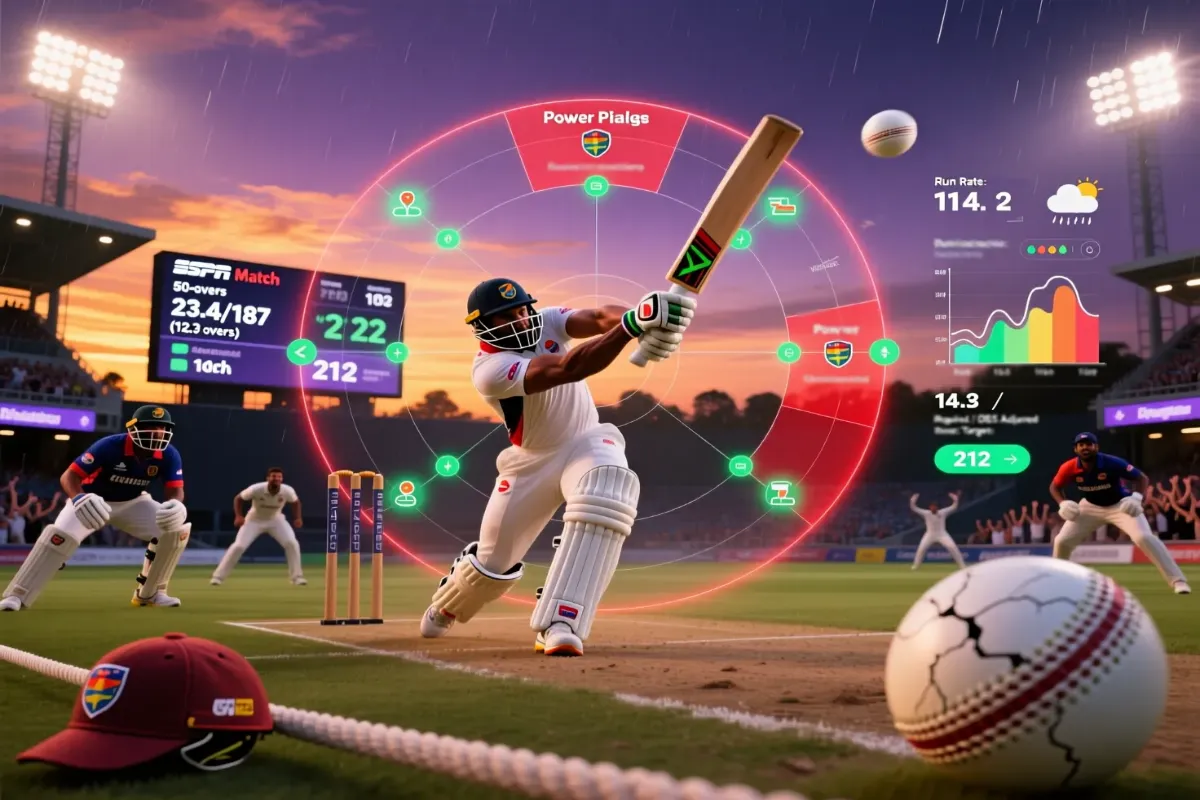
ODI cricket launched in 1971 as a compromise—more exciting than Tests but more substantial than the shorter formats that would come later. Each team faces 50 overs maximum, producing results in a single day. Matches typically last seven to eight hours with a break between innings.
The 50-over structure creates a tactical balancing act that defines ODI betting. Teams must be aggressive enough to post competitive totals but cautious enough to preserve wickets for the full 50 overs. This tension between accumulation and acceleration produces distinct phases that smart bettors exploit.
Powerplay rules shape ODI dynamics completely. The first 10 overs allow only two fielders outside the inner circle, creating opportunities for boundaries but also wickets. Teams typically score at 5-6 runs per over during this phase, more if batting conditions are favorable, less if bowlers are getting movement. Understanding team powerplay strategies is crucial—some teams have openers who attack aggressively, others play more conservatively to preserve wickets.
The middle overs from 11 to 40 are where ODIs are often won or lost, yet betting markets don't always reflect this. Teams consolidate after losing early wickets or build platforms for late acceleration. Spin bowlers dominate this phase, and teams with quality spinners who can control run rates while taking wickets have massive advantages. India's success in ODIs for two decades came partly from having world-class spinners who strangled opponents through the middle.
Death bowling—the final 10 overs—is its own specialized skill. Batsmen attack relentlessly trying to maximize the final score. Bowlers attempt yorkers and slower balls to limit boundaries. This phase typically produces 80-100 runs, sometimes more if death bowling is poor or batsmen are set. When betting totals, understanding death-over capabilities for both batting and bowling sides matters enormously. A team might be 200/4 after 40 overs looking set for 280, but weak death bowling could mean they reach 310, or strong death bowling restricts them to 260.
Chasing versus setting has statistical significance in ODIs. Historically, teams batting second win about 52-53% of matches—a small but real advantage. Knowing the target removes uncertainty about required run rate. But this advantage varies by venue. Some grounds heavily favor chasing, others favor setting targets. Before betting match winners in ODIs, check that specific ground's first innings versus second innings win percentages.
The Duckworth-Lewis-Stern method is the complication every ODI bettor must understand. When rain interrupts play, DLS recalculates target scores based on overs and wickets remaining. The mathematics are complex, but the betting implication is simple: rain doesn't just potentially void bets, it can completely flip match probabilities. A team cruising to victory might suddenly be losing after rain resets the target. Always check weather forecasts before betting ODIs. If there's 30%+ rain probability, odds don't fully account for DLS uncertainty.
ODIs offer the richest statistical history for analysis. The format's been around for 50-plus years with thousands of matches generating data. Patterns emerge clearly—certain players dominate ODIs despite mediocre Test records, some teams consistently perform better in day matches versus day-night, specific grounds produce predictable scoring patterns. This data richness rewards analytical approaches.
The format also creates momentum-based live betting opportunities. ODIs are long enough that you can watch 15-20 overs, identify which team has momentum, and bet accordingly. If a team loses three early wickets, odds lengthen dramatically. But if the remaining batsmen are quality players capable of rebuilding, those lengthened odds represent value. The market often overreacts to short-term setbacks in 50-over cricket because 30 overs remain to correct course.
Partnership betting works particularly well in ODIs. After early wickets, if two quality batsmen come together, betting on their partnership to reach certain totals offers value. Bookmakers set partnership totals based on averages, but context matters—are these batsmen set and seeing the ball well? Is the bowling looking tired? Are conditions easing? Watching the match provides information that opening odds don't incorporate.
The most traditional format is covered in our Test cricket betting guide.
Twenty20: Embracing the Chaos

T20 cricket is barely 20 years old but has transformed the sport completely. Twenty overs per side, three hours total, results guaranteed. It's cricket's answer to modern attention spans, and from a betting perspective, it's either paradise or hell depending on your personality.
The format's brevity means variance dominates outcomes. One batsman scoring 60 off 25 balls can win matches single-handedly. One bowler taking four wickets in 12 balls collapses chases. This individual-performance-driven variance frustrates bettors seeking predictable patterns. You can analyze perfectly and still lose bets regularly because T20 rewards explosive short-term performance over sustained quality.
Pre-match T20 betting is extremely difficult. The statistical edges that work in Tests and ODIs narrow considerably when matches last only 40 overs total. Team quality matters less because there's insufficient time for it to express itself. Variance is so high that underdogs win 35-40% of matches even against superior opponents. This compression of outcomes makes finding value in pre-match T20 markets challenging.
Franchise leagues like the IPL, Big Bash League, CPL, and PSL have turned T20 into a commercial juggernaut. These tournaments feature international stars playing together in teams that change composition every season through player auctions. This instability makes historical performance almost irrelevant. Last year's dominant team might be mediocre this year after losing three key players in the auction. You must track current squad compositions obsessively rather than relying on past results.
The powerplay in T20—first six overs with fielding restrictions—is absolutely critical. Teams typically score 40-55 runs during this phase. A good powerplay might be 55/1, setting up a 180-plus total. A poor powerplay might be 35/3, limiting the team to 140-150. When betting totals in T20, understanding powerplay capabilities for both teams determines your over/under position more than any other single factor.
Death-over bowling is the T20 specialism everyone wants but few teams possess. The final four overs typically see 40-50 runs scored as batsmen attack relentlessly. Bowlers who can consistently execute yorkers under pressure are gold. Teams with genuine death-over specialists have huge advantages that bookmakers don't always price correctly. If you identify bowlers with exceptional death-over numbers, you can bet against high totals even when early innings suggest big scores are coming.
Batting depth matters differently in T20 than longer formats. Unlike Tests where top-order batsmen score most runs, T20 rewards teams with batting down to number eight or nine. If wickets fall early, teams with all-rounders and big-hitting lower-order players can still post competitive totals. When analyzing teams, look at how many players can genuinely strike above 130-140 strike rates. Teams with five such players beat teams with three such players regardless of top-order quality.
Live betting is where T20 offers the most value. Pre-match odds are difficult to beat, but in-play odds overreact constantly to short-term events. A team loses two wickets in one over and odds crash, even though they have six batting wickets remaining and 12 overs to recover. A team scores 20 runs in one over and suddenly they're massive favorites, even though one good over by the bowling side changes everything again. The volatility creates mispricing that observant live bettors exploit.
The match situation changes dramatically every few deliveries in T20. Required run rate, wickets in hand, batsmen at crease, bowlers remaining—all these factors shift constantly. Algorithms updating odds struggle to weight these variables accurately in real time. If you're watching and can judge momentum better than the model, you find value. When a new batsman comes in against quality bowling, odds might not account for the several dot balls needed to get settled. When a batsman is set and seeing the ball well, odds might not account for the acceleration coming in the next few overs.
Home advantage in T20 varies wildly by venue. Small grounds with short boundaries heavily favor batting and produce 180-200 totals routinely. Large grounds favor bowlers and make 160 a competitive score. Knowing ground dimensions isn't optional in T20 betting—it's fundamental. A team might score 195 at one venue and be heavy favorites, but that same team posting 195 at a larger ground might be underdogs because the opposition can chase it down more easily.
Toss impact in T20 deserves special mention. Winning the toss and choosing to bat or bowl provides real advantage at many venues, especially those with evening dew. In Indian conditions, dew settles on the ground in evening matches, making the ball slippery and nearly impossible for bowlers to grip. Teams chasing in dewy conditions have massive advantages. If you're betting on evening T20 matches in India, UAE, or similar climates, check dew forecasts and toss results. A team batting second in heavy dew might be 60-40 favorites in a matchup that looks even on paper.
The Super Over complicates T20 betting in ways you must understand before placing bets. When scores are tied after 20 overs, teams play a one-over eliminator. Some bookmakers count Super Over results as part of the match outcome—if you bet on the team that wins the Super Over, you get paid. Other bookmakers void all bets when matches go to Super Overs, returning stakes. Before betting on closely-matched T20 games, check your bookmaker's Super Over policy. Finding bookmakers who pay out on Super Over wins while others void creates risk-free arbitrage opportunities.
Format Comparison for Betting Strategy

The critical insight is these formats demand completely different analytical frameworks. What works for Test betting fails in T20. What works for ODI betting fails in Tests. Successful cricket bettors specialize in one or two formats rather than betting all three casually.
Test cricket rewards patience, deep analysis, and conditions-based betting. You study pitches, weather, team compositions for five-day cricket. You bet on sessions and innings totals as information develops. You identify draw value when public money overweights team-to-win markets. If you prefer research to rapid decisions, Test betting suits your personality.
ODI cricket requires balancing multiple factors—chasing records at specific venues, powerplay performance, death bowling quality, DLS implications, momentum reading. The 50-over format sits in the middle complexity-wise. It's long enough that quality matters but short enough that variance plays a role. If you enjoy comprehensive analysis but want results in one day rather than five, ODIs offer the best of both worlds.
T20 cricket is variance-driven chaos where live betting offers more value than pre-match positions. You watch matches and bet when odds overreact to short-term events. You track franchise leagues obsessively to understand current squad compositions. You accept that losing streaks happen more frequently than other formats but trust that edges from live betting overcome that variance. If you prefer action to long-term research and can handle bankroll swings, T20 might be your format.
Bankroll allocation should vary by format. Test cricket allows smaller bet sizes with confidence because you have time to assess conditions and find value. ODI cricket sits in the middle. T20 cricket demands the smallest unit sizes because variance is so high—even correct analysis loses regularly. A reasonable approach might be 3-5% units for Tests, 2-3% for ODIs, and 1-2% for T20s, adjusted based on confidence in specific bets.
The bookmaker margins also vary by format. Test cricket often has wider margins because betting volumes are lower. ODI cricket has moderate margins. T20 cricket, especially franchise leagues, has the tightest margins because betting volumes are massive and sharp bettors attack any mispricing aggressively. This means finding value in T20 match-winner markets is harder than finding value in Test match-winner markets, even though T20 feels more random.
Format expertise compounds over time. The more Test matches you analyze, the better you become at reading pitch behavior and predicting how surfaces will play over five days. The more ODIs you watch, the better you judge momentum shifts and partnership potential. The more T20 you follow, the better you identify when live odds overreact. Spreading yourself across all three formats delays developing the expertise that separates profitable bettors from losers.
Practical Betting Strategies for Cricket Formats

When approaching cricket betting, first identify which format aligns with your analytical strengths and temperament. If you love deep research and can wait days for results, focus on Test cricket. If you want balance between analysis and action, specialize in ODIs. If you can handle variance and prefer live betting based on watching matches, pursue T20.
Then build format-specific knowledge systematically. For Tests, study pitch types, deterioration patterns, team compositions for five-day cricket, draw probabilities by venue. For ODIs, analyze chasing records, powerplay performances, death-over specialists, DLS scenarios. For T20, track squad compositions in franchise leagues, identify death-over bowling specialists, understand venue dimensions and their impact on scoring.
Avoid the trap of betting everything that's on television. Bookmakers love bettors who wager on any cricket match available regardless of format or expertise. You don't need to bet every day. The matches you understand deeply because you've specialized in that format and researched that specific matchup are the ones offering genuine edge. Everything else is entertainment disguised as opportunity.
The format distinction also affects which markets offer value. Test cricket's session markets and draw bets contain inefficiencies. ODI partnership and totals markets can be beaten with proper analysis. T20 live betting on momentum shifts beats pre-match positions. Understanding where each format's value lies prevents wasting time analyzing markets that are efficiently priced.
Finally, respect format differences when tracking results. Don't lump all cricket betting together in your records. Separate Test results from ODI results from T20 results. This reveals whether you're actually profitable in the formats you think you're good at. Many bettors believe they're skilled because overall they're slightly ahead, not realizing they're profitable in one format but losing money in another. The format they're profitable in subsidizes losses in formats they should avoid.
Cricket's format diversity is its greatest strength from a betting perspective. Three completely different games offering different types of value for different types of bettors. The trick is matching your approach to the format that rewards your specific skills and temperament, then specializing ruthlessly rather than dabbling everywhere. Do that, and cricket betting becomes less about predicting unpredictable outcomes and more about systematically exploiting the specific inefficiencies that exist within the format you understand best.
Explore all formats at CricketBetTips.com.
