
How to Start Betting on Cricket: A Beginner’s Step-by-Step Guide
 Available in US
Cricket betting attracts millions of punters worldwide, yet the sport remains mystifying to newcomers who grew up watching football or basketball. The terminology sounds foreign, the formats seem endless, and the betting markets multiply faster than you can say "leg before wicket." But here's the thing: cricket betting isn't inherently more complicated than betting on any other sport. It just requires understanding a different set of rules and rhythms.
This guide walks you through everything you need to place your first cricket bet with confidence. We'll cover the practical steps from choosing a bookmaker to managing your initial bankroll, while explaining the fundamentals that separate profitable bettors from those who fund bookmaker profits. Whether you're drawn to the explosive action of T20 leagues or the strategic depth of Test matches, the principles remain the same.
Understanding What You're Getting Into
Before you deposit a single pound, you need to understand what cricket betting actually involves. At its core, you're predicting outcomes and staking money on those predictions. The bookmaker offers odds reflecting the probability of each outcome, and if your prediction proves correct, you win based on those odds. If you're wrong, you lose your stake. Simple enough in theory, but the execution requires knowledge.
Cricket offers something most sports don't: variety in format that fundamentally changes the betting approach. A Test match lasting five days bears little resemblance to a T20 blast finishing in three hours. The strategies that work for one format often fail spectacularly in another. This isn't a weakness but an opportunity. Once you understand these differences, you can specialize in formats where your knowledge exceeds that of casual bettors and, crucially, where bookmakers might misprice odds.
The sport also generates an enormous volume of statistics, far more than most team sports. Batting averages, bowling economies, strike rates, head-to-head records at specific venues—the data points are endless. This statistical richness means informed bettors can develop genuine edges through research. It also means lazy bettors who ignore this information are essentially gambling blind against people who've done their homework.
Choosing Your First Bookmaker
Your choice of bookmaker matters more than beginners typically realize. Not all betting sites offer the same odds, markets, or reliability. Some specialize in cricket and provide dozens of markets per match. Others treat cricket as an afterthought with limited options and wider margins. The difference in odds between bookmakers can significantly impact your long-term profitability.
Licensing should be your first consideration. Only use bookmakers regulated by recognized authorities like the UK Gambling Commission, Malta Gaming Authority, or similar bodies. These licenses ensure the bookmaker operates under strict rules regarding fair play, fund security, and dispute resolution. Unlicensed operators might offer attractive bonuses, but you have zero recourse if they decide not to pay your winnings. The horror stories in betting forums aren't fiction—they're warnings from people who learned expensive lessons.
Beyond licensing, evaluate the bookmaker's cricket coverage. Check how many markets they offer for upcoming matches. Look at whether they cover domestic leagues or only international fixtures. Test their live betting interface to see how quickly odds update during play. Read reviews focusing specifically on withdrawal experiences rather than promotional offers. A bookmaker is only as good as their willingness to pay winners promptly.
Consider opening accounts with multiple bookmakers once you're comfortable. Different sites often offer different odds on the same outcomes, and shopping for the best price becomes essential as you bet more seriously. Many successful bettors maintain accounts at five or more bookmakers to ensure they always get optimal odds.

Setting Up Your Account and Making Your First Deposit
Registration at most betting sites follows a standard pattern. You'll provide personal information including name, address, date of birth, and contact details. The bookmaker uses this information for verification and regulatory compliance. Don't try to fudge details—you'll need to verify your identity before withdrawing winnings, and discrepancies create unnecessary problems.
Identity verification typically requires submitting documents: a government-issued ID and proof of address. Some bookmakers verify instantly through database checks; others require manual document review. Complete this process early rather than waiting until you want to withdraw. Nothing frustrates quite like winning a significant bet and then waiting days for verification approval.
For your first deposit, start small. Many beginners deposit far more than necessary, creating pressure that leads to poor decisions. A bankroll of 50 to 100 pounds is plenty for learning. You can always add more once you understand the mechanics and develop confidence in your approach. Choose a deposit method you're comfortable with—credit cards work universally, but e-wallets like PayPal or Skrill often process withdrawals faster.
Set deposit limits immediately after your first deposit. Every reputable bookmaker offers responsible gambling tools including daily, weekly, or monthly deposit caps. These limits protect you from impulsive decisions during losing streaks. Implementing them before you need them demonstrates the discipline that separates recreational bettors from problem gamblers.
Once you have an account, you need to understand cricket betting markets.
Placing Your First Bet
With money in your account, you're ready to bet. Start with match winner markets—they're the most straightforward and require only predicting which team wins. Navigate to the cricket section, find an upcoming match that interests you, and you'll see odds displayed for each team. In T20 and ODI formats, there are two outcomes: Team A wins or Team B wins. Test matches add a third possibility: the draw.
Understanding what the odds mean is essential before clicking any buttons. If India is listed at 1.50 (decimal odds) against Australia at 2.75, the bookmaker considers India more likely to win. A 10-pound bet on India returns 15 pounds total (including your stake) if India wins. The same bet on Australia returns 27.50 pounds if Australia pulls off the upset. Lower odds mean higher probability in the bookmaker's assessment; higher odds mean lower probability but bigger potential returns.
Before placing the bet, do basic research. Check recent results for both teams. Look at the venue and whether either team has historical advantages there. Consider the playing conditions—is the pitch expected to help batsmen or bowlers? This research takes minutes but separates informed bets from random guesses. Even at the beginner stage, developing research habits pays dividends.
When you're ready, add your selection to the bet slip, enter your stake amount, and confirm the bet. Most bookmakers show potential returns before confirmation, letting you verify everything looks correct. Double-check the stake amount particularly—placing a 100-pound bet when you meant to bet 10 pounds is an unpleasant surprise.
Managing Your Bankroll From Day One
Bankroll management isn't glamorous, but it determines whether you're still betting in six months or whether you've blown through your funds and quit in frustration. The fundamental principle is simple: never bet more than a small percentage of your total bankroll on any single bet. Most professionals recommend 1-5% per bet, with beginners sticking to the lower end.
If you've deposited 100 pounds, your maximum bet should be 5 pounds—and 2-3 pounds is more appropriate while learning. This feels conservative, maybe even boring. That's intentional. Conservative staking ensures that inevitable losing streaks don't devastate your bankroll. Variance affects everyone, including sharp bettors who profit long-term. The goal is surviving variance to reach the long term.
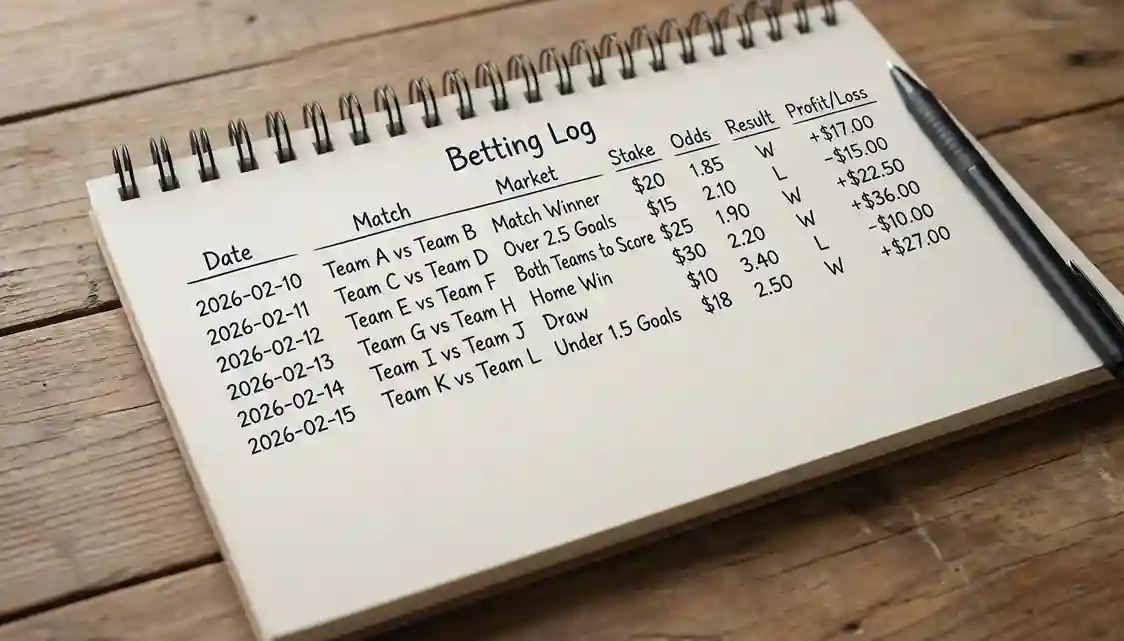
Track every bet you place. Use a spreadsheet or dedicated app to record the date, match, market, stake, odds, and outcome. After 20-30 bets, review your records. Which types of bets are you winning? Which are you losing? Are you betting emotionally after losses? Data reveals patterns your memory distorts. Successful bettors treat betting as a business, and businesses track their performance.
Resist the temptation to increase stakes after losses. Chasing losses—betting more to quickly recover—is the fastest path to empty accounts. If you're losing consistently, the solution isn't bigger bets but better analysis of why you're losing. Similarly, don't dramatically increase stakes after wins. Overconfidence leads to the same destination as desperation, just via a different route.
Building Knowledge Before Building Profits
Profitable cricket betting requires cricket knowledge. If you're new to the sport, invest time watching matches before betting seriously. Pay attention to how different conditions affect play. Notice how teams approach different formats. Learn which players excel in specific situations. This education is free and essential.
Follow cricket news and analysis. Understanding why teams make certain selections, how injuries affect lineups, and what analysts expect from upcoming matches provides context that improves your predictions. You don't need to become an expert overnight, but consistent engagement with cricket content builds the foundation for informed betting.
Consider paper trading initially—tracking hypothetical bets without staking real money. This practice lets you test your analysis without financial risk. After a month of paper trading, review your hypothetical results. Were you profitable? If not, why not? This exercise reveals whether your approach has potential before you commit significant funds.
The learning curve in cricket betting is real but manageable. Everyone starts as a beginner, including the sharp bettors who now profit consistently. The difference between those who succeed and those who fail often comes down to patience, discipline, and willingness to learn from mistakes. Approach betting as a skill to develop rather than a lottery to win, and you'll already be ahead of most newcomers who expect instant success from minimal effort.
Next Steps: Continuing Your Cricket Betting Journey
Once you're comfortable with basic match winner bets, you can expand into other markets. Totals betting—wagering on whether runs exceed or fall below bookmaker projections—offers opportunities without requiring you to pick winners. Player performance markets let you focus on individual batsmen or bowlers rather than team outcomes. Live betting adds the dimension of reacting to match developments in real time.
But don't rush. Master the fundamentals before adding complexity. A bettor who consistently finds value in match winner markets will outperform someone who dabbles in dozens of markets without understanding any deeply. Specialization beats superficiality in cricket betting as in most endeavors requiring skill.
The journey from complete beginner to competent bettor takes months, not days. Accept this timeline. The bookmakers aren't going anywhere, and the matches keep coming. There's no prize for betting volume and significant benefit to betting selectively on matches where you have genuine insight. Start small, learn constantly, track everything, and treat early losses as tuition fees for your betting education.
Start your journey at CricketBetTips.com.
