
Cricket Tournament Betting Guide: IPL, World Cup & Major Events
 Available in US
Tournament cricket is a completely different beast from bilateral series. The stakes are higher, the pressure is amplified, the format creates unique dynamics that don't exist in regular matches. Teams play back-to-back games with minimal recovery. Squad depth suddenly matters more than star quality. Momentum builds across multiple victories or collapses after early losses. The tactical calculations change when one bad day eliminates you from competition.
Most bettors treat tournaments like collections of individual matches, applying the same analysis they'd use for a random ODI between England and Australia in July. That's wrong, and it costs them money. Tournament cricket has specific patterns that reward specific betting approaches.
I've spent years betting on cricket tournaments—World Cups, IPL seasons, T20 leagues, Champions Trophy. Some approaches I thought would work failed spectacularly. Others I stumbled into accidentally proved consistently profitable. The patterns that separate tournament betting from regular cricket betting aren't obvious until you've watched them play out across multiple tournaments.
This guide breaks down how to bet tournament cricket profitably. Not generic advice that applies to any cricket match, but specific strategies for the unique environment tournaments create. You'll learn why pre-tournament favorites often disappoint, how knockout stage psychology differs from group stages, which tournament formats create value opportunities, and how to adjust your approach as tournaments progress and information accumulates.
Understanding Tournament Structures and Formats
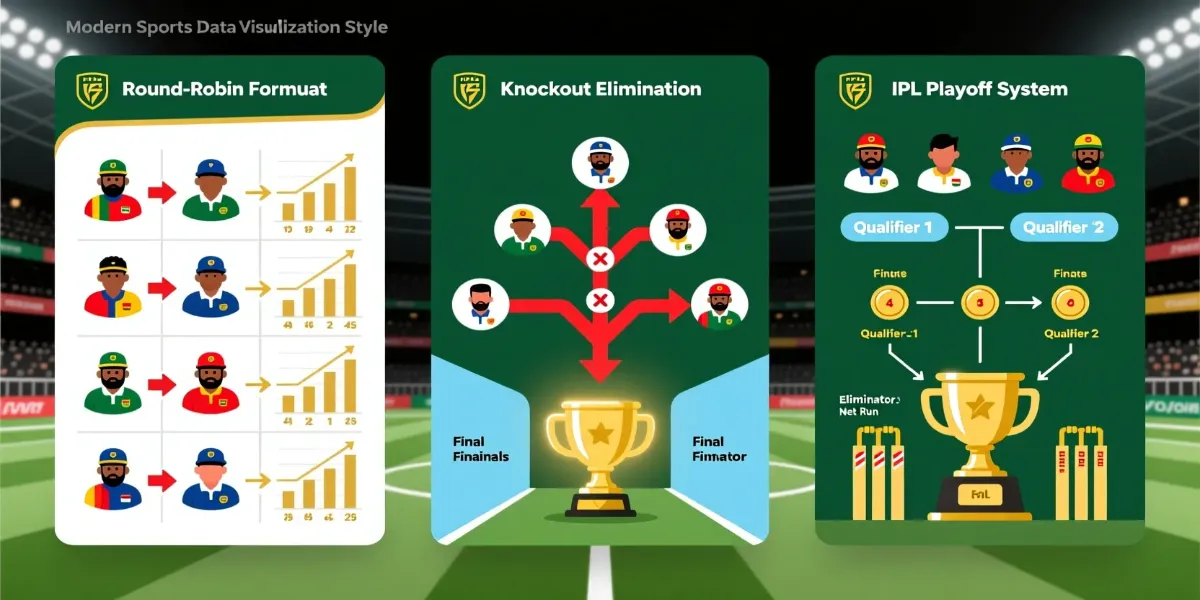
Cricket tournaments use different structures that create completely different betting dynamics. The format determines how much variance affects outcomes, when to bet aggressively versus conservatively, and which teams have structural advantages beyond pure quality.
Round-robin group stages with top-team qualification are the most common format. Every team plays every other team in their group, with the top four advancing to knockouts. This structure reduces variance—quality teams that lose one or two matches can still advance. But it also means the early group matches matter less than later ones. Teams that have already qualified might rest players. Teams eliminated early might play carelessly.
Single-elimination knockouts maximize variance. One bad match and your tournament ends regardless of how dominant you were previously. This creates massive pressure that affects teams differently. Some teams thrive under pressure—think Australia in World Cups. Others choke repeatedly—South Africa's World Cup history is painful to watch. Understanding which teams handle knockout pressure well versus which teams collapse matters more than overall quality.
The IPL uses a unique playoff structure where top two teams get two chances to reach the final, while teams three and four have less margin for error. This creates strategic advantages for finishing first or second versus third or fourth that odds don't always reflect properly. If two teams are evenly matched, the team likely to finish higher in the standings has better tournament win probability than odds suggests.
Super League formats in some tournaments mean teams play everyone once, then split into two groups based on standings for second-round matches. Teams carry forward points from head-to-head matches in the first round. This creates complicated scenarios where a team might be better off losing a first-round match if it creates a more favorable second-round group. Most bettors don't analyze these strategic complexities, creating value for those who do.
Home advantage matters differently in tournaments versus bilateral series. World Cups hosted in one country give the host nation massive advantages—familiar conditions, crowd support, no travel fatigue. But multi-country World Cups dilute this advantage since teams play in different venues. The IPL eliminates home advantage entirely since franchise teams don't represent geographic regions despite nominally "home" stadiums.
Pre-Tournament Betting: Outright Winner Markets

Betting on tournament winners before competition begins locks your capital up for weeks or months but offers higher odds than betting match-by-match. The key is identifying teams bookmakers undervalue that have genuine win probability.
Favorites are almost always overvalued. India winning a World Cup in India might be 2.50 odds at pre-tournament, implying 40% win probability. But even dominant teams don't win 40% of tournaments—variance is too high. Historical data shows favorites win major cricket tournaments about 25-30% of the time. This means backing favorites consistently loses money despite frequent wins because the odds don't compensate for the times they lose.
The value exists in second-tier teams with specific advantages the market underprices. England in 2019 World Cup were around 4.00-5.00 pre-tournament despite being arguably the best ODI team in the world for years leading up. The market undervalued them because of historical World Cup underperformance. They won, paying out nicely for anyone who ignored history and focused on current quality.
Teams with strong recent form get overvalued through recency bias. If Australia has won 10 consecutive ODIs heading into a World Cup, their odds will shorten dramatically. But that winning streak might have come against weak opponents or in favorable conditions. If the World Cup is in different conditions against tougher opposition, that form means less than odds suggest. Strip away narrative and analyze objective quality.
Squad depth is underpriced in tournament betting. A team with 15 quality players can rotate to manage workload and adapt to different matchups. A team with 11 quality players and four passengers struggles when injuries occur or conditions favor players not in the best XI. Long tournaments with compressed schedules reward depth more than any single series would. But pre-tournament odds often focus on best XI quality rather than full squad depth.
Conditions matter enormously. The 2023 World Cup in India on subcontinental pitches favored teams with quality spinners and batsmen comfortable against spin. Teams built for seaming conditions in England struggled. If you identified this before the tournament and backed teams suited to conditions while avoiding those unsuited, you had massive edge over bookmakers pricing based on general quality.
Tournament experience and pressure-handling create edges. Some teams consistently perform in major tournaments despite not being the absolute best team on paper. Australia's World Cup record demonstrates this—they've won five World Cups partly through being excellent but mostly through being unshakeable under pressure. Conversely, some quality teams choke repeatedly in knockouts. This pattern is real and predictable enough to exploit.
Group Stage Betting Strategy
Early group matches contain less information than later ones, creating both uncertainty and opportunity. Your strategy should evolve as the tournament progresses and data accumulates.
The opening match overreaction is the most reliable tournament betting pattern. The first match of any tournament gets disproportionate weight in odds adjustments. A team loses their opening match and suddenly their odds to win the tournament lengthen dramatically. But it's one match—variance happens. If that team is genuinely quality, their lengthened odds after one loss offer value.
Monitor how teams respond to early setbacks. Some teams panic after losing early and spiral into poor performance. Others regroup and improve. The second match after a team's opening loss reveals which pattern they're following. If a quality team lost their opener but played well in patches and are making smart adjustments, backing them in match two or three offers value before they establish a winning streak that shortens their odds again.
As teams play multiple matches, ignore results and analyze performance. A team might be 3-0 but scraping wins through luck rather than dominance. Another team might be 1-2 but playing quality cricket while being undone by narrow margins. Which team has better prospects? The 1-2 team playing well, obviously. But odds will favor the 3-0 team because recreational bettors see "three wins" and assume dominance.
Dead rubber matches create mispricing. Once a team has qualified for knockouts or been eliminated, their motivation in remaining group matches changes. Qualified teams rest players to manage workload. Eliminated teams play carelessly or experimentally. Betting against teams with nothing to play for offers value when opponents are fighting for qualification spots.
Group stage momentum isn't as predictive as it feels. A team winning four straight group matches creates psychological momentum that feels powerful. But knockout cricket is different—single elimination, maximum pressure, often different opponents. That group stage momentum matters less than underlying quality and pressure-handling. Don't overweight recent group results when betting knockouts.
Live betting group matches offers huge edges early in tournaments. Bookmakers are still calibrating tournament form. Their algorithms haven't adjusted to how specific teams are performing in tournament conditions. If you're watching matches and can assess situations better than models still using pre-tournament assumptions, you find value that disappears later after algorithms adapt.
Knockout Stage Psychology and Strategy

Everything changes in knockouts. The pressure amplifies. Tactics become more conservative as teams prioritize not losing over aggressively winning. One bad session can end your tournament regardless of how brilliant you've been for six weeks.
Teams that handled group stages easily sometimes collapse in knockouts when stakes increase. This isn't random—it's predictable based on experience and psychological makeup. Teams with veteran players who've won big matches handle pressure better than teams of talented youngsters without big-match experience. Australia, India, and England have multiple players with knockout experience. Afghanistan, despite being talented, has minimal knockout experience.
The favorite paradox intensifies in knockouts. Favorites have pressure to win that underdogs don't feel. An underdog losing a semifinal meets expectations—they overachieved to get there. A favorite losing a semifinal is humiliation, career-defining disappointment, media and fan outrage. This asymmetric pressure affects performance. Favorites often play tight and nervous while underdogs play freely with nothing to lose.
Knockout matches frequently come down to moments—a brilliant catch, a questionable umpiring decision, a batsman playing one bad shot. Quality matters less than in group stages where teams play multiple matches that average out variance. One crucial moment can determine an entire tournament. This inherent randomness means betting knockout matches requires wider margins of error and smaller unit sizes than group stage betting.
Teams built for consistency struggle in knockout variance while teams built around match-winners thrive. A team that posts competitive totals consistently but rarely posts huge totals or blows out opponents will win lots of group matches. But in knockouts, you often need someone to play a match-winning innings or take a match-winning spell. Teams with genuine match-winners—players capable of single-handedly changing games—have advantages in knockouts that quality depth provides in group stages.
Toss advantage matters more in knockouts than group stages. In group stages, losing the toss and batting first when you'd prefer to chase is annoying but you have other matches to recover. In knockouts, one toss going against you can mean tournament over. Some venues have massive toss advantages—winning the toss and choosing to bat or chase determines the match more than team quality. Research venue-specific toss advantages before betting knockouts.
Betting against teams in their first tournament knockout is reliable. The first time a team experiences elimination-pressure cricket, they typically struggle. Pakistan in early World Cup knockouts, New Zealand before their recent resurgence, England before 2019—all struggled in first knockouts before learning to handle pressure. If a team is in knockouts for the first time against experienced opponents, they're overvalued.
Make sure you are betting with the best cricket betting sites.
IPL: The Unique Franchise Dynamic

The IPL is cricket's commercial juggernaut and creates betting dynamics that don't exist in international tournaments. Player auctions mean squad compositions change dramatically year-to-year. Teams represent cities rather than countries, eliminating national pride factors. The franchise model creates incentives different from representing your nation.
Historical performance means almost nothing in IPL betting. Chennai Super Kings dominating last season tells you little about this season if they've lost three key players in the auction and acquired different stars. Unlike international teams that maintain squads across multiple tournaments, IPL teams rebuild constantly. Focus on current squad composition, not previous seasons' results.
Pre-season analysis of squad balance predicts IPL success better than star power. Teams need powerplay hitters, middle-overs accumulators, death-overs finishers, powerplay bowlers, middle-overs controllers, and death bowlers. If a team has all six roles filled with quality players, they'll perform regardless of whether they have the biggest individual stars. If they're missing roles—say, no genuine death bowler—they'll struggle even with multiple superstars.
Home advantage works differently in IPL. Teams nominally have "home" stadiums but many matches are played at neutral venues due to scheduling. Even when playing at their designated home ground, half the team might be international players unfamiliar with the venue. The crowd support exists but player familiarity is minimal. Research actual home/away records at specific grounds rather than assuming traditional home advantage.
Player availability fluctuates throughout IPL tournaments. International commitments sometimes pull players mid-tournament. If a team loses their star overseas bowler to national duty, their strength changes dramatically. Bookmakers adjust odds when player unavailability is announced, but there's often a window between news breaking and odds adjusting where value exists.
Back-to-back matches create fatigue that affects teams unevenly. IPL schedules sometimes have teams playing twice in three days while others have four-day breaks. The team with less rest is disadvantaged beyond what pre-match odds typically reflect. Check match scheduling before betting—a strong team on one day's rest facing a decent team on four days' rest might actually be the underdog.
Playoff qualification scenarios create dead rubber matches similar to World Cup groups. Once a team is mathematically eliminated or has guaranteed first place, remaining league matches matter less to them. But teams fighting for fourth playoff spot are desperate. This motivation mismatch creates value backing desperate teams against comfortable teams.
World Cup Dynamics and Betting Approaches
World Cups are cricket's biggest stage, creating unique psychological and strategic dynamics. They happen infrequently enough that even experienced players might participate in only two or three. The pressure is unlike anything else in cricket.
The World Cup curse for favorites is real and exploitable. Bookmaker favorites have worse records in World Cups than their odds imply. Part of this is the pressure of expectations. Part is that World Cup matches attract the best opposition performances—teams raise their game against favorites. Part is variance over a relatively small sample of matches. Whatever the cause, backing World Cup favorites consistently loses money.
Underdogs perform better in World Cups than bilateral series. An Afghanistan or Ireland might lose to India 9 times out of 10 in a bilateral series. But in a World Cup, that drops to maybe 7 out of 10. The underdog motivation, the fact that favorites sometimes underestimate them, and the one-off nature means upsets happen more frequently. Betting underdogs strategically in World Cup group stages offers value.
World Cup knockout matches are brutal. More so than any other cricket, World Cup knockouts come down to pressure management and crucial moments. The semifinal and final are often won by teams that aren't the absolute best team in the tournament but are the best at handling pressure. India's World Cup final losses despite being favorites both times demonstrates this—they're exceptional at winning group matches but struggle in knockout pressure.
Host nation advantage in World Cups is the strongest in cricket. A team playing a World Cup at home has familiar conditions, massive crowd support, no travel fatigue, and emotional motivation that overseas teams can't match. India in 2011, England in 2019, Australia in 2015—all won World Cups at home. If you're betting on a World Cup hosted in one country, heavily factor home team advantage into calculations more than you would for any bilateral series.
Weather becomes a critical factor in World Cups. Unlike bilateral series where rain-affected matches are annoying but there's another match soon, a World Cup match affected by rain can determine tournament outcomes. Duckworth-Lewis calculations create bizarre scenarios. If a tournament is in monsoon season, factor weather into every bet. Some teams handle shortened matches better than others.
World Cup between tournaments—the gap is four years—means player primes shift. A player who dominated the last World Cup might be declining. A player who was unknown four years ago might now be world-class. Historical World Cup performance matters less than current form and quality. Ignore narratives about "World Cup specialists"—they're usually just variance being misinterpreted as skill.
Other Major Tournaments: T20 World Cups, Champions Trophy, Asia Cup
T20 World Cups are variance maximized. The format is short enough that upsets happen constantly. The best team doesn't always win—often doesn't even reach semifinals. This makes T20 World Cup betting frustrating but also creates value.
Live betting is the only profitable approach to T20 World Cups. Pre-match odds are nearly efficient. But during matches, odds swing wildly based on two or three overs of play. If you're watching and can judge whether those overs represent genuine momentum shifts or variance, you find edges. T20 World Cup live betting rewards feel for the game over statistical analysis.
Champions Trophy historically has different winners than World Cups despite similar format. The eight-team structure means every match matters more than 10-team World Cup group stages where teams have margin for error. This compressed format favors teams that start hot rather than teams that build momentum gradually. Back teams with aggressive opening strategies that can win close matches early.
Asia Cup dynamics depend on format. When it's ODI, India and Pakistan dominate with occasional Bangladesh upset. When it's T20, variance allows smaller teams to compete. The key is the format determines upset probability more than team quality. An Asia Cup T20 has more upset potential than an Asia Cup ODI, affecting how you should weight favorites versus underdogs.
Bilateral series masquerading as tournaments create unique dynamics. Sometimes what's marketed as a tournament is essentially a bilateral series with a fancy name. These don't have the psychological weight of actual tournaments. Teams treat them like series matches, meaning your analysis should too. Don't overthink "tournament dynamics" that don't actually exist.
Managing Bankroll Across Tournaments
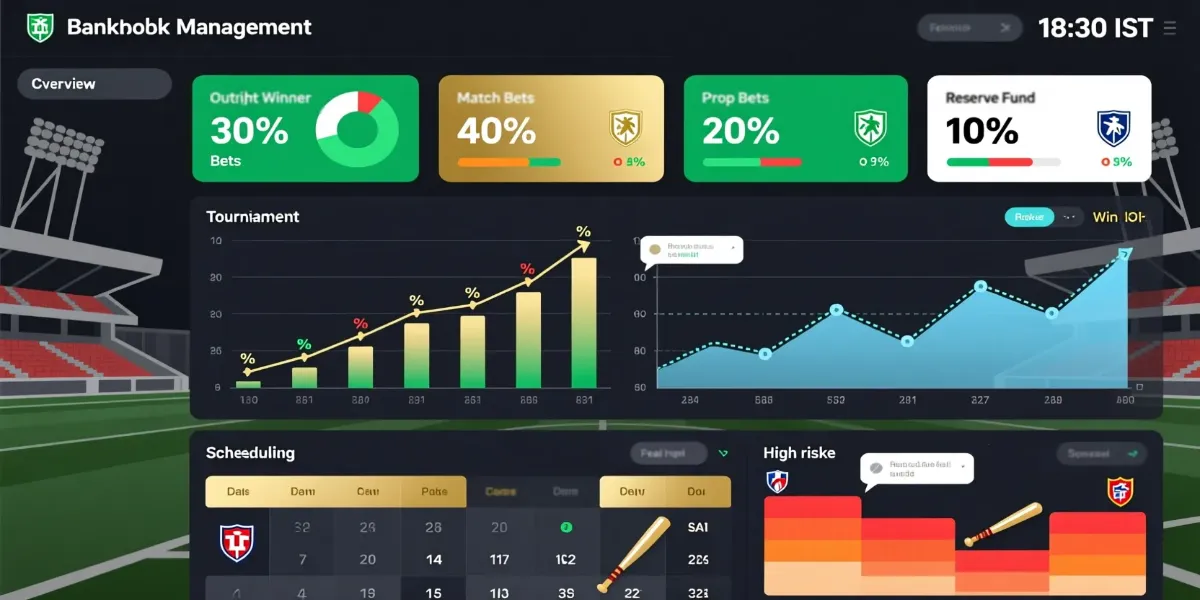
Tournament betting creates different bankroll considerations than betting individual matches throughout a year. Your capital is often committed to multiple bets simultaneously—outright winner bets, group stage matches, player props across the tournament. Managing exposure prevents one bad day or one wrong tournament winner bet from destroying your bankroll.
Allocate tournament bankroll separately from regular betting bankroll. Decide you're devoting 20% of your overall bankroll to this tournament. That prevents over-committing to one tournament at the expense of other opportunities. Within that tournament allocation, further divide it—maybe 30% to outright/futures bets, 70% to individual match betting.
Don't chase outright winner bets with match betting. If you backed Australia to win the World Cup at 5.00 and they lose in the semifinal, that bet is done. Don't start betting against whoever eliminated them to "get your money back." Each bet should be evaluated independently for value, not as part of emotional revenge betting.
Tournament betting requires patience about when to bet. The best value in outright markets often comes after opening matches when one loss causes dramatic odds lengthening on quality teams. The best value in match betting often comes mid-tournament when you have data but the market hasn't fully adjusted. Don't feel compelled to bet every match just because a tournament is happening.
As tournaments progress and information accumulates, your unit sizes can increase slightly on later matches where you have higher confidence. Early tournament matches have more uncertainty—smaller units. Knockout matches where you've watched teams play five or six times and understand their tournament form—slightly larger units if you have genuine edges.
Common Tournament Betting Mistakes
The biggest mistake is treating tournaments like individual matches. Bettors apply the same analysis that works in bilateral series and wonder why they're losing money. Tournament cricket has unique dynamics—understand them or lose.
Overvaluing early matches creates poor decisions. The opening match of a tournament determines very little about who wins overall. Yet bettors massively overreact to first-match results. A quality team losing their opener might still win the tournament—it happens regularly. Betting against them after one loss at lengthened odds is often the best value bet of the entire tournament.
Ignoring squad depth costs money in long tournaments. A team with 11 quality players and four mediocre ones gets exposed when injuries occur or when back-to-back matches create fatigue. Teams with genuine depth—15 players who could reasonably be in the best XI—maintain performance across compressed schedules. This depth advantage shows up most clearly in the later stages when other teams are struggling with fitness and fatigue.
Betting every match because the tournament is on television is gambling, not betting. Just because IPL is showing a match every evening doesn't mean every match offers value. The best bettors might make 15-20 bets across a 60-match IPL season, focusing on situations where they have genuine edges. Casual bettors bet 50 of 60 matches and wonder why they're losing despite "knowing cricket."
Following the crowd on popular teams loses money consistently. India, England, Australia—these teams always attract massive public money that shortens their odds below true probability. Bookmakers know this and shade odds accordingly. Betting on popular teams requires finding specific situations where they're undervalued, which is rare. More often, value exists elsewhere.
Not adjusting strategy as tournaments progress is failing to use available information. Your approach in match one when no tournament data exists should be different from match 30 when you've seen every team play five times. Early tournament: rely more on pre-tournament analysis and recent form. Late tournament: weight actual tournament performance heavily over pre-tournament expectations.
Tournament betting rewards specialization, patience, and psychological understanding more than regular cricket betting. Master one tournament type, understand its unique dynamics, and bet selectively when genuine edges exist. That's the path to profitability.
Browse all events at CricketBetTips.com.
