
T20 World Cup Betting Guide: Strategies for Cricket’s Fastest Format
 Available in US
The ICC T20 World Cup brings cricket's shortest format to its biggest stage. Every two years, the world's nations compete in a tournament that combines the unpredictability of T20 cricket with the pressure of knockout elimination. This combination creates betting markets unlike anything else in cricket—higher variance than the 50-over World Cup, more matches than bilateral T20 series, and the intensity that only global championship events generate.
What makes T20 World Cup betting distinct is the tension between format-inherent unpredictability and the tournament structures that concentrate talent and pressure. Understanding how these forces interact—rather than treating the tournament as simply more T20 matches—positions you for profitable betting.
Format Variance Meets Tournament Structure
T20 cricket is inherently high-variance. Twenty overs isn't long enough for better teams to consistently assert dominance over weaker opponents. Individual brilliance regularly overrides collective strength. This variance, present in all T20 cricket, has specific implications for World Cup betting.
Upsets happen more frequently than in ODI World Cups. The shorter format gives underdogs realistic chances in any single match. Ireland beating England, Namibia pushing major nations, Scotland upsetting fancied opponents—these aren't aberrations but predictable features of T20 World Cups. Betting markets that price favorites too heavily based on overall team quality underestimate format-specific upset probability.
Pool stages help normalize variance somewhat—teams play multiple matches, allowing better squads to accumulate points despite occasional stumbles. But knockouts return to single-match unpredictability. A team that wins six straight pool matches might lose a semifinal to an opponent they'd beat in a series format. This tension between accumulated form and knockout variance shapes how you should approach different tournament phases.
Super Over scenarios occur more frequently in T20 than in ODI cricket. When matches tie, the Super Over essentially becomes coin-flip cricket. Understanding that Super Overs are possible—and that they randomize outcomes further—should temper confidence in any single knockout match prediction.
Host Conditions and Venue Rotation
T20 World Cups rotate between host nations and sometimes feature co-hosting arrangements across multiple countries. The 2024 tournament in the USA and Caribbean demonstrated how varied hosting can dramatically affect conditions.
Venue familiarity differs by host region. Caribbean pitches suit West Indian players who've grown up on similar surfaces. Australian conditions favor pace bowling that Asian batsmen sometimes struggle against. Subcontinental tournaments help spin-oriented teams while challenging pace-reliant strategies. Before each World Cup, research how hosting conditions have historically influenced outcomes.
Purpose-built T20 venues like those used in Associate nation hosts can produce unusual cricket. Drop-in pitches, unfamiliar dimensions, and atmospheric conditions that full members rarely encounter create genuine uncertainty. When tournaments use non-traditional venues, historical patterns become less predictive and live assessment of conditions becomes more important.
Travel between venues within multi-venue tournaments creates fatigue factors. Teams shuttling between cities face different conditions each match. Those with consistent venue assignments—particularly host nations playing frequently on home grounds—gain advantages from reduced travel and familiar surroundings.
Squad Composition for T20
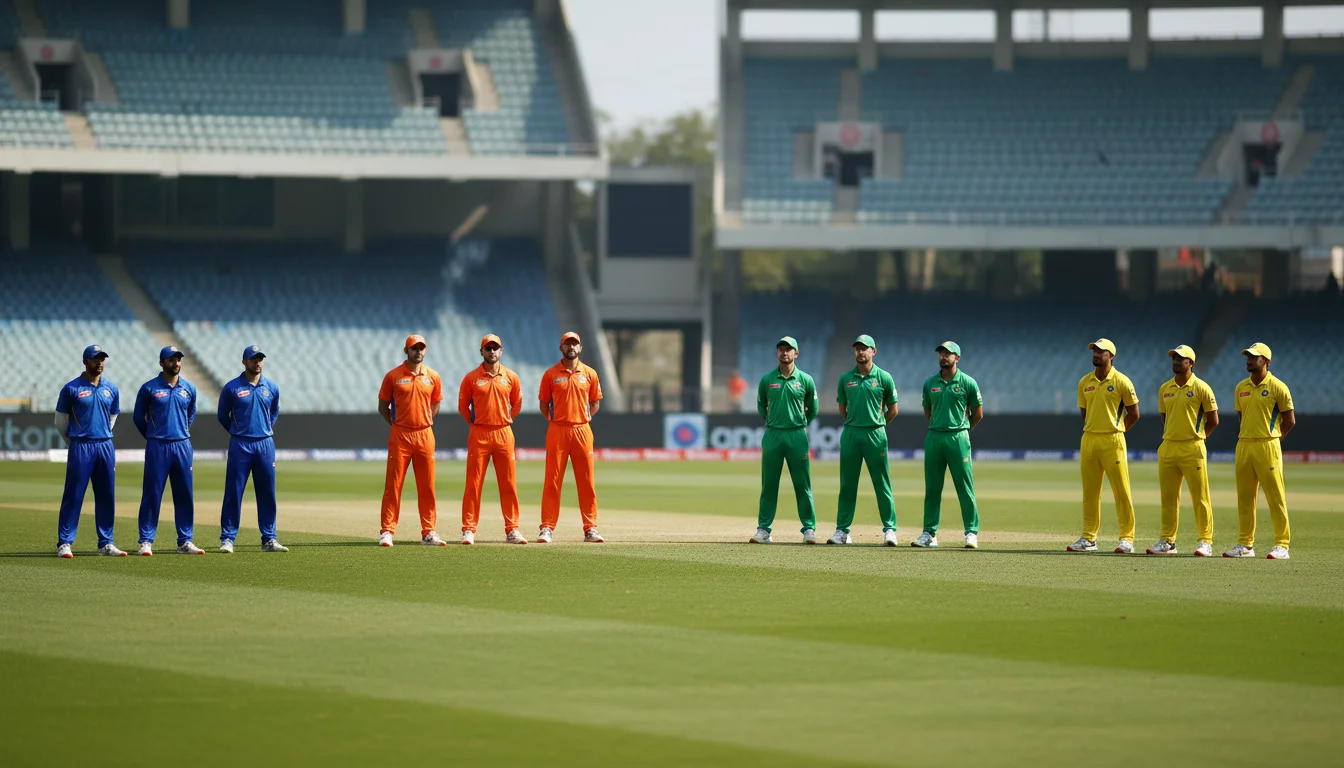
T20 World Cup squads differ from ODI squads in important ways. Understanding what makes effective T20 international teams helps assess which nations have built for the format versus those converting ODI strength.
Bowling depth matters more than batting depth in T20 internationals. Teams need bowlers who can handle death overs pressure—five or six genuine options for the final five overs. Teams with only two reliable death bowlers face serious vulnerability when those options underperform. Analyze each squad's bowling depth before assuming batting firepower translates to tournament success.
All-rounders provide crucial squad flexibility. Players who can bat at six or seven while bowling key overs give captains options that specialist-heavy squads lack. Teams with two or three genuine all-rounders can adjust to different match situations more effectively. Count all-rounder options when evaluating squad quality.
Fielding athleticism is often undervalued in pre-tournament assessment. T20 cricket's boundary-dependent scoring means saved boundaries and caught chances have amplified impact. Teams with superior fielding units gain edges that don't appear in batting and bowling statistics. The West Indies and Australia have historically benefited from fielding quality that complemented their skill positions.
Outright Winner Betting
T20 World Cup outright markets are more open than ODI World Cup equivalents. The format's variance means genuine contenders extend beyond traditional favorites, creating wider odds ranges and more potential value picks.
Second-tier nations often offer the best value. The pre-tournament favorite is rarely value because public money compresses their odds. Teams like Afghanistan, who have genuine T20 quality without traditional powerhouse status, sometimes offer attractive prices relative to their actual winning probability. Identifying which unfashionable teams have built specifically for T20 format can reveal value hidden from casual bettors.
The depth of contenders makes hedging more complex than in ODI World Cups. When six or eight teams have realistic title chances, protecting early positions requires more sophisticated hedging strategies. Some bettors prefer smaller initial positions on multiple contenders rather than larger positions requiring later hedging.
Form entering the tournament matters less than you might expect. T20 World Cups occur mid-calendar when different nations are at different points in their cycles. Teams coming off successful bilateral series might peak too early; teams with lighter schedules might arrive fresher. The condensed tournament timeline can see form change rapidly from pool stages to knockouts.
For a broader look at competitions, visit our tournament cricket betting page.
Super 8 and Pool Stage Strategy
Recent T20 World Cup formats have included Super 8 rounds between initial pools and knockouts. Understanding how these intermediate stages work shapes betting approach.
Super 8 rounds extend tournament exposure for advancing teams. More matches mean more opportunities for edges to compound but also more variance exposure. Teams that qualify comfortably can manage workloads differently than those who scraped through. Qualification margin affects Super 8 performance in ways that simple win/loss records don't capture.
Run rate considerations influence pool stage tactics. Teams chasing big wins to boost run rate might take risks that produce either dominant victories or surprising collapses. When betting pool stage totals, consider whether run rate incentives are affecting team approaches beyond normal match dynamics.
Dead rubber pool matches—where outcomes don't affect qualification—produce unusual cricket. Eliminated teams might experiment freely. Qualified teams might rest key players. Motivation disparities create unpredictability that statistical models struggle to capture. Consider avoiding these matches or betting specifically based on motivation assessment.
Knockout Round Dynamics
T20 World Cup knockouts produce cricket's most volatile betting markets. The combination of format variance and elimination pressure creates outcomes that frequently defy pre-match expectations.
Backing favorites at short odds in knockouts is generally poor value. Even clearly superior teams face significant upset probability in single T20 matches. When favorites are priced at 1.50 or shorter in knockout matches, the implied probability often exceeds realistic assessment of their winning chances. Value more frequently lies with underdogs, particularly those with strong bowling attacks that can restrict opponents.
Death bowling determines knockout outcomes more than batting firepower. Teams that can defend 160 have advantages over teams that need to post 180 to feel comfortable. Assessing death bowling quality—who handles the pressure phases when batsmen are swinging hard—helps predict knockout match results.
Weather affects T20 knockouts differently than in ODIs. DLS targets in shortened T20 matches can feel arbitrary, and matches reduced to five or ten overs per side become essentially random. When weather threatens knockout matches, consider whether taking positions before potential interruptions offers value or whether waiting for clarity is wiser.

Player Markets and Tournament Props
T20 World Cup player markets reflect the format's individual-centric nature. Star performers can dominate tournaments in ways that ODI cricket's longer duration doesn't allow.
Leading run-scorer markets favor openers with guaranteed batting positions. Unlike middle-order batsmen who might not bat in quick chases, openers face deliveries in every innings. Backing openers from teams expected to reach later tournament rounds captures both positional advantage and match volume.
Leading wicket-taker markets in T20 often see spinners perform well despite the format's boundary-hitting focus. Spinners typically bowl more total overs than pace bowlers, creating more wicket-taking opportunities. When pace bowlers are favored in these markets based on raw ability, spinners might offer value through volume.
Player of the tournament predictions should weight match-winning contributions over cumulative statistics. A player whose fifty wins a semifinal might be valued more highly by selectors than one who scores more total runs without decisive impact. Understanding how awards are decided—statistics versus perceived impact—helps predict these subjective outcomes.
Managing T20 World Cup Betting
The tournament's intensity and compressed schedule require specific betting management approaches. Multiple matches on some days, constant information flow, and emotional investment in national teams create challenges beyond regular cricket betting.
Selectivity becomes more valuable during tournaments. With matches daily, the temptation to bet everything grows. Resist this temptation. Focus on matches where your analysis provides genuine edge rather than betting from fear of missing action. Fewer, higher-conviction bets typically outperform scattered engagement across every match.
Track your performance by tournament phase. You might discover that your analysis excels in pool stages but struggles in knockouts, or vice versa. This information shapes future tournament approaches—specializing in phases where your analysis succeeds rather than forcing engagement throughout.
The T20 World Cup generates enormous public betting interest. This interest can create inefficiencies when public sentiment diverges from reality—but can also make markets more efficient as volume increases. Understanding when you're betting with or against public sentiment helps assess whether your position is contrarian value or confirmation bias.
Return to the CricketBetTips homepage.
