
Understanding Cricket Pitch Conditions for Betting
 Available in US
The pitch is cricket's hidden variable—the factor that transforms identical teams into completely different betting propositions depending on surface characteristics. Two teams that produce one outcome on a flat batting track might produce the opposite outcome on a spinning minefield. Bettors who understand pitch behavior gain edge over those who bet based on team quality alone, and this edge compounds across hundreds of matches where surface conditions influence results.
What makes pitch analysis valuable for betting is that it's knowable before matches begin but often underweighted by markets. You can research venue histories, examine pitch photos, read curator statements, and check weather patterns. This information is publicly available, yet many bettors ignore it, creating opportunities for those who invest in pitch literacy.
How Pitches Affect Match Outcomes
Different surfaces produce different cricket because they alter the fundamental contest between bat and ball. Understanding these mechanics explains why pitch information matters for betting.
Pace pitches benefit fast bowlers and punish technical deficiencies. On bouncy, quick surfaces—typical of Australia, South Africa, and some West Indian venues—the ball reaches batsmen faster and at more challenging heights. Batsmen with poor technique against short-pitched bowling struggle; those with solid defensive games and quick reactions thrive. Teams with tall, fast bowlers gain advantages they don't have on slower surfaces.
Spin-friendly pitches reward finger and wrist spinners while neutralizing pace attacks. Dry surfaces with deterioration over time—common in the subcontinent—allow spin bowlers to grip the ball, extract turn, and vary bounce. Teams with quality spinners and batsmen who play spin well dominate these conditions. Pace bowlers without variations become expensive cannon fodder.
Seaming pitches assist bowlers who move the ball off the surface. Green-tinged pitches with moisture—typical of early-season England or New Zealand—provide lateral movement that tests batting techniques. The ball doesn't necessarily bounce steeply but deviates unpredictably. Teams with skilled seam bowlers and batsmen comfortable leaving balls outside off stump hold advantages.
Reading Pitch Conditions Pre-Match
Gathering pitch information before betting helps you assess how conditions might influence outcomes. Multiple information sources combine to create useful pictures.
Venue history provides baseline expectations. Some grounds consistently produce certain pitch types. The WACA in Perth plays fast and bouncy; Galle in Sri Lanka assists spin; Lord's typically offers seam movement early before flattening. Research how your match venue has played historically—not just recent matches but patterns across years and formats.
Recent matches at the same venue reveal current surface tendencies. If the previous Test at this ground produced a result in three days on a spinning pitch, the next match might behave similarly. If the last three T20s produced scores over 200, batting-friendly conditions likely persist. This recent evidence supplements longer-term venue history.
Weather preceding and during matches affects pitch behavior. Rain softens surfaces, creating conditions that assist seam bowling when play resumes. Extreme heat dries and cracks pitches, creating variable bounce and spin. Humidity affects how much the ball swings through the air (separate from pitch effects but equally important). Check forecasts not just for rain but for conditions that affect surface preparation and match-day behavior.
Pitch photos and expert commentary sometimes reveal information not captured in statistics. A pitch with visible cracks might spin more than venue history suggests. A fresh pitch with grass covering might seam more than expected. When available, visual information and expert assessments add nuance to statistical analysis.
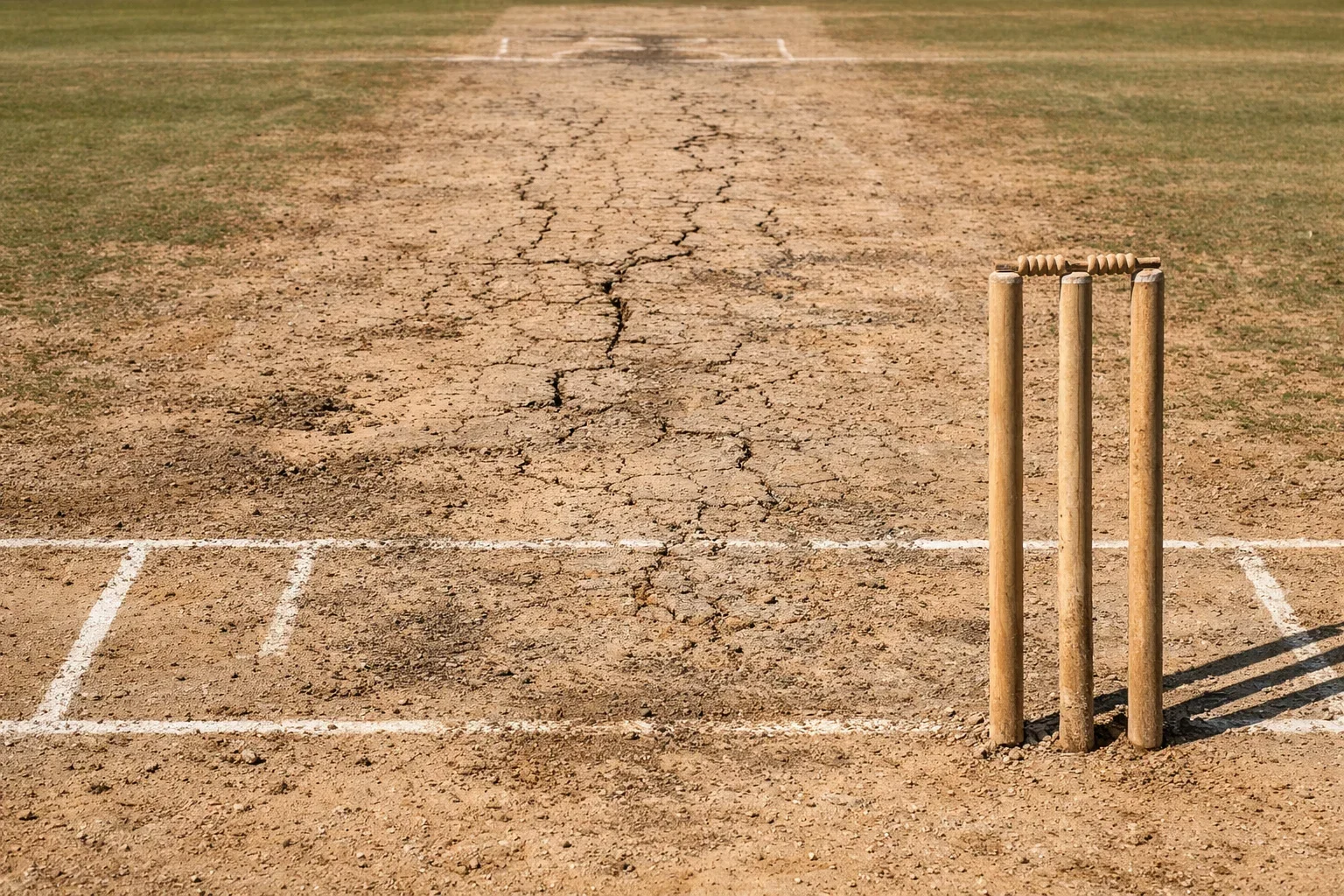
Pitch Deterioration Across Match Duration
Pitches change as matches progress, particularly in longer formats. Understanding deterioration patterns helps predict how match dynamics will shift.
Day one of Test matches typically favors batting. Fresh pitches are at their most consistent, with even bounce and minimal spin. As matches progress, pitches wear—cracks open, the surface dries, and consistency decreases. Day four and five sessions often play entirely differently from opening sessions. Betting on Test matches requires predicting not just current conditions but how conditions will evolve.
Spin increases as pitches age in most conditions. The surface loses binding, allowing spin bowlers to grip and turn the ball. Teams batting fourth on worn pitches face different challenges than those batting first on fresh surfaces. Fourth-innings chases of moderate targets often fail on deteriorated pitches because batting becomes exponentially harder.
Some pitches deteriorate faster than others. Subcontinent surfaces often turn sharply by day three; Australian pitches might remain consistent throughout five days. Research how specific venues deteriorate—not just that deterioration happens but when it becomes significant and how dramatically conditions change.
Format-Specific Pitch Considerations
Each cricket format interacts with pitch conditions differently. The same pitch might produce different betting implications for Test, ODI, and T20 cricket.
Test cricket amplifies pitch effects. Five days allow conditions to influence results fully. A spinning pitch produces spin-dominated cricket across multiple sessions. A seaming pitch might flatten but still provide early movement each morning. Test betting should weight pitch factors heavily because their effects compound across match duration.
ODI cricket compresses pitch effects into single days. Conditions at the start—when the ball is new and pitch fresh—differ from conditions at the end of each innings. First-innings batting on subcontinental pitches is often easier than second-innings chasing when the surface has worn. These intra-match variations matter for ODI betting even though the overall match duration limits long-term deterioration.
T20 cricket reduces pitch influence relative to individual performances. The format's brevity means even difficult pitches don't produce dramatic collapses if one batsman plays well. However, pitch conditions still affect par scores. A 160 total on a batting-friendly surface differs completely from 160 on a challenging one. T20 totals betting requires understanding what constitutes par on specific surfaces.
Integrating Pitch Analysis with Team Assessment
Pitch analysis matters most when combined with team evaluation. The same pitch conditions might favor one team dramatically over another.
Match team strengths to pitch characteristics. A team with four quality spinners playing on a turning track has structural advantage their opponents might lack. A team whose batsmen struggle against pace bowling visiting Australia faces compounded difficulties. When pitch conditions align with team strengths—or exploit opponent weaknesses—betting implications magnify.
Squad selection reveals team assessments of likely conditions. When a team picks three spinners instead of their usual two, they're predicting spin-friendly conditions. When four seamers make the lineup, pace bowling is expected to dominate. Selection decisions provide information about conditions that you can compare to your own assessment.
Player-specific pitch interactions create prop betting opportunities. A batsman who averages 60 on flat pitches but 25 on turners becomes much more predictable when you know pitch conditions. A spinner who takes wickets cheaply on helpful surfaces but struggles on flat tracks offers different value depending on conditions. These individual variations enable player market betting based on pitch assessment.

Common Pitch Analysis Mistakes
Several errors undermine pitch-based betting analysis. Avoiding these mistakes improves your pitch-informed predictions.
Over-relying on venue reputation without checking recent evidence. Grounds can change. Curators sometimes prepare pitches that contradict venue history—intentionally or due to circumstances. The MCG used to be fast and bouncy; recent pitches have been flatter. Assuming venues always play to type ignores evolution and produces outdated analysis.
Ignoring weather effects on prepared pitches. A pitch prepared as a batting-friendly surface can become bowler-friendly if rain intervenes before or during the match. Similarly, unexpected heat can accelerate deterioration beyond historical patterns. Match conditions, not just surface preparation, determine how pitches play.
Applying Test pitch analysis to limited-overs cricket directly. The same physical surface produces different cricket in different formats. A pitch that would spin dangerously on day five of a Test might play perfectly fine for a T20 completed before significant deterioration. Format context matters for translating pitch characteristics into match predictions.
Building Pitch Intelligence Over Time
Systematic pitch analysis builds knowledge that compounds across your betting career. Each match adds to your understanding of how different conditions affect outcomes.
Record pitch assessments and actual outcomes. Before matches, note your pitch evaluation. After matches, record how the pitch actually played. Over time, this comparison reveals whether your assessments are accurate or systematically biased. If you consistently underestimate spin influence at certain venues, you'll discover this pattern through review.
Study matches specifically to learn pitch effects. Watch how different pitches behave—not just results but the nature of play. How did the ball behave in each session? When did deterioration become significant? Which bowlers extracted what from the surface? This observational learning supplements statistical analysis.
Pitch knowledge is relatively durable. Unlike form-based knowledge that becomes stale quickly, pitch understanding persists. A venue that assists spin this year will likely assist spin next year. Investing in pitch literacy provides returns across many future matches at venues you've studied.
