
Cricket Betting Exchanges Explained: Trading Cricket Markets
 Available in US
Betting exchanges fundamentally differ from traditional bookmakers. Rather than betting against a bookmaker who sets odds, exchange users bet against each other—backing outcomes they think will happen and laying outcomes they think won't. This peer-to-peer structure creates different opportunities, different strategies, and different skill requirements than conventional betting.
What makes exchanges particularly powerful for cricket is the ability to trade positions during matches. You can back a team pre-match, then lay them during the match to lock in profit or cut losses regardless of final outcome. This trading capability transforms cricket betting from pure prediction into something closer to financial trading—where timing and market reading matter alongside analytical accuracy.
How Exchanges Work
Understanding exchange mechanics is essential before attempting to use them profitably. The core concepts differ significantly from traditional betting.
Backing and laying represent opposite sides of the same bet. When you back Team A at 2.00, you're betting they'll win—if they do, you profit; if they don't, you lose your stake. When you lay Team A at 2.00, you're betting against them winning—if they lose or draw, you profit; if they win, you pay out. Every exchange bet has a backer and a layer; the exchange simply matches these opposing positions.
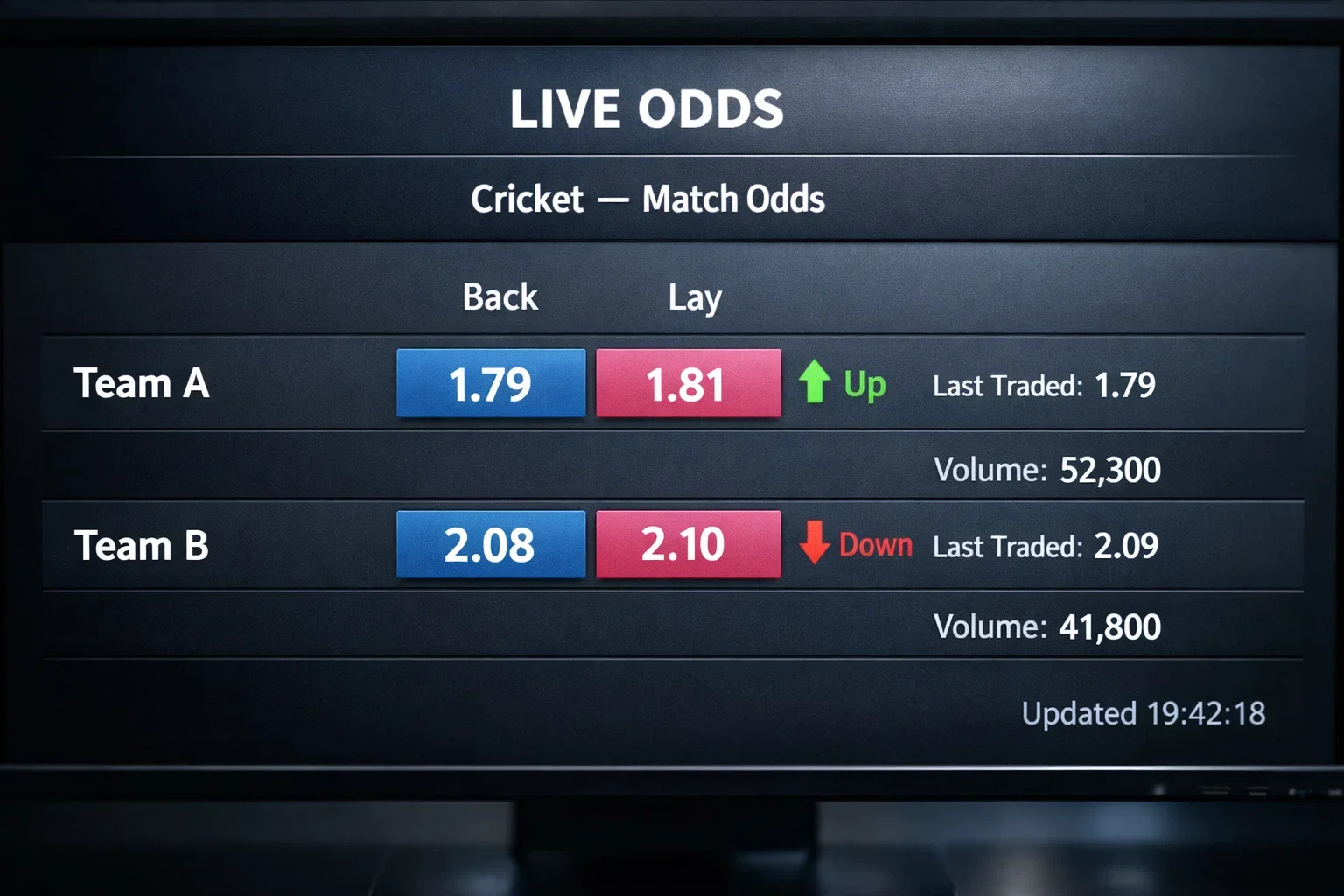
Odds on exchanges represent what other users are willing to offer, not what a bookmaker has calculated. If someone wants to back at 2.00 but no one will lay at that price, the bet doesn't get matched. Exchange odds fluctuate based on supply and demand—when backing money floods in, odds shorten; when laying money dominates, odds lengthen. This dynamic creates both opportunity and uncertainty.
Commission affects net returns. Exchanges take a percentage of winning bets—typically 2-5% depending on the exchange and your betting volume. This commission reduces effective odds and must be factored into value calculations. A 2.00 back bet with 5% commission actually returns 1.95; small differences compound significantly over many bets.
Exchange Advantages Over Bookmakers
Exchanges offer several structural advantages that attract serious bettors away from traditional bookmakers.
Better odds frequently available. Because exchanges don't build margin into every price—profit comes from commission on winners—exchange odds often exceed bookmaker prices. The best available odds for backing frequently appear on exchanges. For regular bettors, consistently getting 2-3% better odds compounds into significant additional profit.
No account restrictions for winning. Traditional bookmakers limit or close accounts of successful bettors. Exchanges welcome winners because they facilitate betting rather than take losing positions against bettors. A successful exchange bettor can continue operating indefinitely without worrying about stake restrictions or account closure.
Laying bets is impossible with traditional bookmakers. Exchanges let you bet against outcomes—a powerful capability when you have conviction that something won't happen but less certainty about what will happen. You might not know who will win a match but feel confident one specific team won't win. Laying lets you express this view.
Cricket-Specific Exchange Strategies
Cricket's structure creates particular exchange opportunities that don't exist in faster sports.
Match trading exploits momentum swings. Cricket matches swing between teams as wickets fall and runs accumulate. Backing one team pre-match then laying them when they're in a strong position locks in profit. For example: back India at 2.50 pre-match; if they win the toss and start well, their odds might shorten to 1.80. Laying at 1.80 guarantees profit regardless of outcome—the lay profit if India loses exceeds the back loss, while the back profit if India wins exceeds the lay liability.
Session trading focuses on shorter timeframes. Rather than trading entire matches, you trade morning, afternoon, or evening sessions in Test cricket. Back the batting team at session start; if they survive without losing wickets, their odds shorten and you can lay for profit. This approach reduces exposure time and lets you trade multiple times per day.
Runs markets offer continuous trading opportunities. As innings progress, runs totals markets move constantly. If you correctly anticipate scoring acceleration or slowdown, you can trade runs markets profitably. Back over 300 when you expect acceleration; lay over 300 when you expect slowdown or wickets. These markets move rapidly, creating frequent entry and exit opportunities.
The Laying Advantage
Laying bets—betting against outcomes—represents the exchange's most distinctive capability. Understanding when and how to lay improves exchange betting significantly.
Laying heavy favorites can be profitable. When a team is priced at 1.20 to win (implying 83% probability), they must win roughly five times for every one loss just for layers to break even. If you assess their true probability at 75%, laying offers value despite the favorite status. Small edges on heavy favorites compound because you're betting relatively often on outcomes that occur relatively often—just slightly less often than odds imply.
Laying in-play after favorable developments captures value. If the pre-match favorite loses the toss and starts poorly, their odds lengthen—perhaps to 1.50 or 2.00. Laying at this extended price offers better value than pre-match laying would have. Their chances have genuinely declined; laying now captures that decline.
Laying multiple outcomes creates Dutch-book positions. In a three-way market (Team A win, Team B win, Draw), you might lay all three at different times when each gets too short. If your combined lay liability across all outcomes is less than what you'd receive from the other outcomes, you've guaranteed profit. This requires careful timing and execution but represents pure arbitrage when achieved.
Liquidity Considerations
Exchange effectiveness depends on liquidity—how much money is available to match your bets at acceptable prices.
High-profile cricket matches have excellent liquidity. IPL matches, international Tests, and World Cup games attract substantial betting volume. You can typically get bets matched at displayed prices for reasonable stakes. Less prominent matches—domestic games, Associate nation cricket—have thin liquidity where getting matched at desired prices becomes difficult.
Liquidity varies during matches. Pre-match liquidity is often highest; early match liquidity can thin as casual bettors stop; crucial phases see liquidity surge again. Planning your trading around liquidity patterns improves execution. Don't assume you can exit positions during low-liquidity periods just because you entered during high-liquidity ones.
Queue position matters in liquid markets. When you request odds slightly better than currently available, your request enters a queue. If the market moves favorably, requests ahead of you get filled first. Large positions might only partially fill before odds move away. Understanding queue dynamics helps manage expectations about fill rates.
Risk Management on Exchanges
Exchange betting—particularly trading—introduces risks that conventional betting doesn't present.
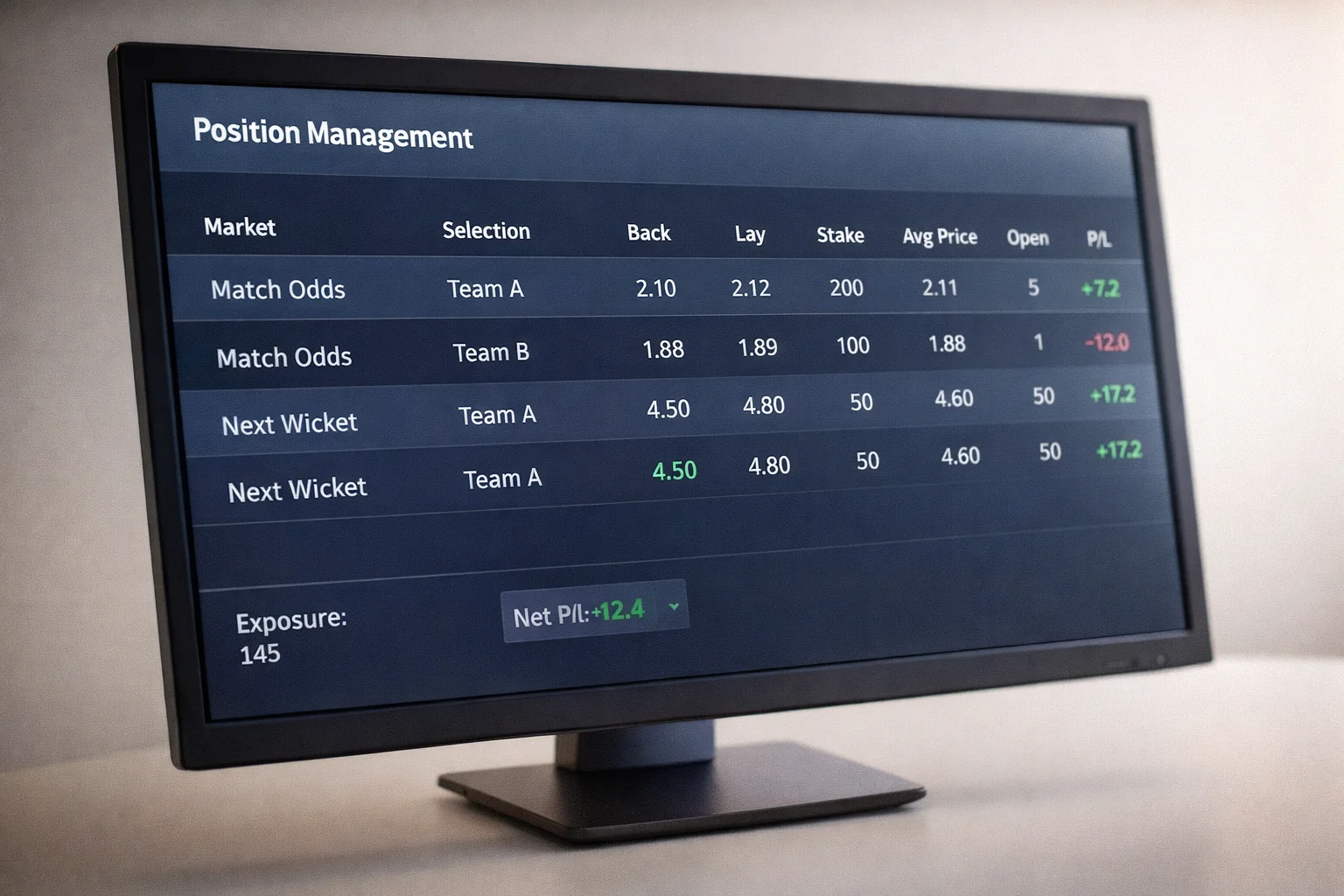
Unmatched bets create exposure. If you place a bet at odds that don't match, you're exposed to market movement. Odds might never reach your requested price; alternatively, you might get matched at a price that's moved against value while you weren't watching. Manage unmatched bet exposure by canceling or adjusting orders that don't match promptly.
Partial matches create awkward positions. You might want to back 100 pounds at 2.50 but only 40 pounds matches. You now hold a smaller position than intended—do you accept partial exposure or seek additional matching at potentially worse prices? Having policies for handling partial matches prevents indecision during live trading.
Laying carries potentially unlimited liability. When you lay, your loss if the outcome occurs is the odds minus one, multiplied by the backer's stake. Laying at 10.00 means losing 9 units for every unit of backer stake you accepted. High odds laying can produce painful losses when unlikely outcomes occur. Size lay positions conservatively, especially at long odds.
Exchange Selection and Accounts
Multiple exchanges exist with different characteristics. Understanding these differences helps you choose appropriate platforms.
Betfair dominates cricket exchange markets with the best liquidity. For most cricket betting, Betfair provides the deepest markets and tightest spreads. However, their commission rates vary by user tier—high-volume bettors earn lower commission rates through loyalty programs.
Alternative exchanges offer lower commission but less liquidity. Smarkets, Betdaq, and others might provide better value for positions that would match anyway, but larger positions or less popular markets might not fill. Consider using multiple exchanges—primary accounts at liquid exchanges, secondary accounts at low-commission alternatives for appropriate positions.
Exchange accounts rarely face restrictions, but misuse of features can cause issues. Carefully read terms of service regarding trading behaviors, promotional abuse, and market manipulation. Exchanges want users who provide liquidity and trading volume; behaviors that suggest exploitation rather than genuine betting might trigger review.
Building Exchange Competence
Exchange betting requires skills that traditional betting doesn't develop. Building these skills takes time and practice.
Paper trade before risking significant money. Track what trades you would make and what results would occur. This practice reveals whether your market reading and timing actually produce profits before real money is at stake. Paper trading lacks emotional intensity of real trading, but it develops pattern recognition and decision frameworks.
Start with straightforward back/lay positions before complex trading. Master simple exchange betting before attempting multi-leg trades or sophisticated strategies. The mechanics of exchanges—how orders work, how commission affects returns, how liquidity varies—are better learned with simple positions.
Review your exchange trading rigorously. Which trades produced profit? Which lost money? Was timing optimal or could you have entered or exited better? This analysis reveals which exchange strategies actually work for you and which looked promising but didn't deliver.
